The Psychology of 5-Star Reviews: What Guests Really Want
The psychology of 5-star reviews is not just about “nice homes.” It’s about how guests remember the experience - and which moments shape that memory more than the average of everything in between.
This is where psychology helps. The research behind the peak-end rule shows that people remember experiences largely by their most intense moments and how they end, not by the total duration. This has been demonstrated across many real-world settings, including medical procedures and other high‑emotion experiences.
Now map that to hosting, and five-star reviews become much more predictable.
How we’re applying psychology (so it stays practical)
This post combines:
- Memory research (peak-end effects) to understand what guests remember when they leave an overall rating.
- Airbnb’s rating categories (accuracy, check-in, communication, cleanliness, etc.) to translate psychology into host actions you can implement quickly.
The review system that shapes guest psychology
Airbnb asks guests to rate accuracy, check‑in, communication, location, value, and cleanliness, and it notes that the overall rating is its own category (not an average). This matters because it tells you where the guest is paying attention.
Airbnb’s quality guidance also emphasizes getting those categories right consistently, especially accuracy, check‑in, and cleanliness.
Translation: Reviews aren’t just feelings; they follow a structure. If you design for those categories, you design for five stars.
The psychology behind five-star reviews (and how to use it)
1) The first 10 minutes are a peak
Guests have a burst of emotion when they arrive. If the first 10 minutes feel smooth, they start from a positive baseline. If they’re confusing, the whole stay feels harder.
Design for it:
- Short, visual check‑in instructions (3 photos, 3 steps).
- WiFi and basic house info visible within 60 seconds.
- A clear “what to do first” section in your guide.
2) The last 10 minutes are the ending
The peak‑end rule says endings weigh heavily in memory. A stressful checkout can erase three great days. A simple checkout can lock in a positive review.
Design for it:
- Keep checkout to 2–3 steps.
- Send a short reminder the day before.
- End with a warm thank‑you (one sentence, personal if possible).
3) Cleanliness is a trust signal
Cleanliness is a rated category and a core expectation. Hosts who miss it pay for it in reviews. Airbnb’s guidance explicitly includes cleanliness as a core part of quality.
Design for it:
- Use a checklist and a 5‑minute final sweep.
- Make “clean” visible (bathrooms, linens, kitchen counters).
- Neutral scent > perfumed scent.
4) Communication reduces anxiety, not questions
Guests don’t want constant messaging. They want certainty. Airbnb expects hosts to respond within 24 hours to inquiries and requests, and late responses lower response rate and can affect search placement.
Design for it:
- One pre‑arrival message with access + parking + WiFi.
- One first‑night check‑in (“Everything okay?”).
- Then go quiet unless needed.
5) Accuracy protects the review before it’s written
Guests feel misled when photos or descriptions don’t match reality. Airbnb’s rating categories make accuracy explicit, and their quality guidance recommends keeping listing details current.
Design for it:
- Update photos after any meaningful change.
- Call out seasonal changes (pool closed, snow access, etc.).
- Remove “nice‑to‑have” claims you can’t guarantee.
The five-star review formula (in one line)
Peak + End + Trust = 5 stars
- Peak: first 10 minutes, standout moment, or thoughtful touch
- End: easy checkout and a warm close
- Trust: accuracy, cleanliness, fast response
This is exactly how guests remember a stay.
A simple checklist you can use today
- Arrival is frictionless (guest can enter without texting you)
- Info is visible fast (WiFi + basics in one place)
- Cleanliness is obvious (bathroom and kitchen pass the eye test)
- Checkout is easy (2–3 steps, no surprises)
- Your listing matches reality (photos and amenities are current)
Pick one item to fix this week. That is how reviews move.
Want to reduce friction without more work?
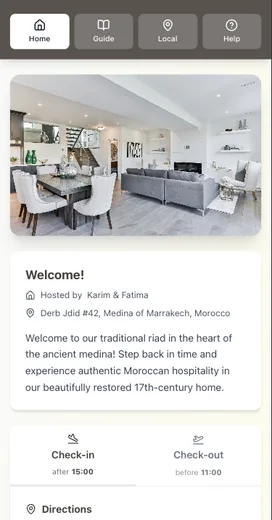
A digital welcome guide centralizes check-in, WiFi, house rules, and local tips so guests can self-serve. Start with Five-Star Airbnb Reviews: What 1,000 Reviews Reveal or The Superhost Secret Weapon.
Conclusion
The psychology of 5-star reviews is straightforward once you focus on what guests actually remember: a smooth arrival, obvious cleanliness and accuracy, and a low-stress checkout that ends the stay on a high note.
Key takeaways:
- Guests remember peaks and endings more than the “average” of a stay.
- Airbnb’s rating categories tell you exactly what guests score.
- Cleanliness, accuracy, and check‑in are trust levers, not just tasks.
- A small change to arrival or checkout can change the review.
If you want to make this repeatable, keep your check-in, WiFi, house rules, and local tips in one scannable guide guests can access anytime. Related reads: Five-Star Airbnb Reviews: What 1,000 Reviews Reveal and 5-Star Airbnb Host: What Top Hosts Do Differently.
Resources
Related posts
- Five-Star Airbnb Reviews: What 1,000 Reviews Reveal
- The Superhost Secret Weapon: What Top Hosts Do Differently
- The Real Cost of Being an Airbnb Host: A Time Breakdown
- 5-Star Airbnb Host: What Top Hosts Do Differently
Sources
- Airbnb Help Center: Ratings for homes
- Airbnb Resource Center: Maintaining quality
- Airbnb Help Center: Response rate and time
- Airbnb Help Center: Why hosts are asked to respond within 24 hours
- From Experience to Memory: Peak‑End Rule review (PMC)
- Mental effort & discomfort and the peak‑end effect (PMC)