Memorable Airbnb Stay Psychology: What Guests Remember Most
A memorable Airbnb stay is not created by doing more. It is created by shaping the moments people remember most.
Psychology research shows that our memory of an experience is heavily influenced by its peak (the most intense moment) and its ending, rather than the average of every moment. This is known as the peak-end rule, demonstrated in classic work by Kahneman and colleagues and discussed in later research on remembered experiences (see Kahneman et al., 1993 and a later review on the topic in PubMed).
That insight makes hosting clearer: if you want better reviews, design your peaks and your endings.
How we’re using psychology here (so it stays practical)
This post focuses on two types of evidence:
- Memory and evaluation research (peak-end effects): how people summarize an experience when asked for an overall rating.
- Review mechanics (Airbnb’s rating categories): the moments guests consistently evaluate during and after a stay.
Then we translate that into host actions you can implement without adding a bunch of “extra touches.”
The memory framework that shapes reviews
Airbnb asks guests to rate accuracy, check-in, communication, location, value, and cleanliness, and it notes that overall rating is its own category (not an average). See Ratings for homes.
These categories map perfectly to the moments that become memory anchors:
- Check-in = the first peak
- Cleanliness = trust signal
- Communication = anxiety reducer
- Accuracy = expectation alignment
- Checkout = the ending
The 4 moments guests remember most
1) The first 10 minutes (the first peak)
The arrival moment is emotional: relief, excitement, or stress. Make it easy and you start the stay on the right side of memory.
Design it:
- 3-step entry instructions (short, visual)
- WiFi and basics visible within 60 seconds
- A clear “what to do first” note
2) The first night (the reality check)
Guests decide if the stay matches the listing on night one. This is where accuracy and cleanliness show up.
Design it:
- Obvious cleanliness (bathrooms, linens, counters)
- One-line appliance tips (TV, thermostat)
- A small comfort detail (extra blanket, water)
3) The standout moment (the emotional peak)
It does not have to be expensive. A local tip that saves time or a thoughtful touch can become the peak.
Design it:
- One highly specific local recommendation
- A welcome note with a short, personal line
- A small “first meal” suggestion for late arrivals
4) The checkout (the ending)
The end disproportionately shapes memory. Research on peak-end effects shows that endings carry extra weight in retrospective evaluations (see Kahneman et al., 1993 and a later review on the topic in PubMed).
Design it:
- Keep checkout to 2-3 steps
- Send the reminder the day before
- End with a warm thank-you
The psychology behind guest complaints
Most complaints are not about luxury. They are about friction. When check-in is unclear or checkout is stressful, that moment becomes the remembered peak or end.
The peak-end rule is not perfect in every setting, but evidence shows it influences how people summarize experiences, especially when they are asked to give a single overall rating. That is exactly what Airbnb asks guests to do.
A simple “memorable stay” checklist
Use this before every busy season:
- Arrival: can a first-time guest enter without texting me?
- First night: is cleanliness obvious within 60 seconds?
- Peak: is there one small, memorable moment?
- End: is checkout short and clear?
Pick one item to improve this month. That is how memory shifts.
Want to apply this without extra work?
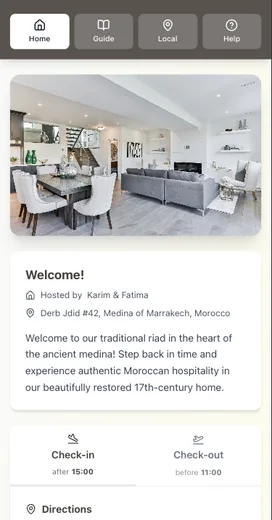
A digital welcome guide centralizes check-in, WiFi, house rules, and local tips so guests can self-serve. Start with Five-Star Airbnb Reviews: What 1,000 Reviews Reveal or The Psychology of 5-Star Reviews.
Conclusion
A memorable Airbnb stay is usually the result of less friction (not more effort). If you improve the arrival, create one standout moment, and keep checkout simple, you’re optimizing the parts of the stay guests are most likely to remember and review.
Key takeaways:
- People remember peaks and endings more than the average of a stay.
- Arrival and checkout are the highest-leverage moments to design.
- A small, specific touch can become the “peak” guests talk about.
- Clear, centralized info prevents negative peaks and last-minute stress.
If you want to make this repeatable, build a digital welcome guide once, then reuse it for every guest. Be My Guest makes it easy to keep check-in, WiFi, house rules, and local tips in one mobile-first place.
Resources
Related posts
- Five-Star Airbnb Reviews: What 1,000 Reviews Reveal
- The Psychology of 5-Star Reviews
- 5-Star Airbnb Host: What Top Hosts Do Differently
- Why Your Airbnb Guests Keep Asking the Same Questions