First Year Airbnb Hosting: From Overwhelmed to Confident
Most first-year hosts don’t fail because they lack effort. They fail because they lack systems. If you’re in your first year Airbnb hosting, this story is meant to feel uncomfortably familiar (in a helpful way).
This is a composite story built from the most common patterns we see in new-host journeys: a promising listing, a flood of guest questions, and a slow realization that “working harder” is not the same as “working smarter.” If you are in your first year, you will recognize the turning points.
How this story was built (and why it’s not a “case study”)
This is a composite, not a single host’s private data. We built it by combining:
- Common “repeat question” patterns (WiFi, parking, check-in, early arrival).
- Airbnb’s quality levers (rating categories and Superhost criteria).
- The typical progression new hosts experience: overwhelm -> systems -> consistency.
The goal is to give you a roadmap you can apply, without pretending one person’s results are guaranteed.
Month 1: Excited, then instantly overwhelmed
Our host (we’ll call her Maya) launched her first listing with a clean space, nice photos, and a warm welcome message. The bookings came quickly.
The problem started right after the first booking:
- “How do I park?”
- “What’s the WiFi password?”
- “Do you have an iron?”
- “Can we check in early?”
Each question took only a few minutes to answer, but the interruptions were constant. She was hosting and running a full-time job. The calendar was filling, but so was her stress.
She assumed this was normal, that being busy meant she was doing it right.
“I thought hosting was just answering questions as they came in. I didn’t realize I was creating them.”
Month 2: The first review wake-up call
Her first few reviews were good, but not great: 4.6, 4.7, 4.8. Nothing disastrous, but not the “five-star momentum” she expected.
This is where it matters to know how Airbnb evaluates quality. Guests rate overall and by category (accuracy, check-in, communication, location, and value). Those category scores are not just fluff; they shape the guest experience and are part of how hosts understand where to improve. Airbnb also notes that overall rating is its own category, not an average of the others.
Maya’s reviews mentioned good location and comfort, but hinted at small friction points:
- “Check-in was a little confusing.”
- “We couldn’t find the trash instructions.”
- “Great place, but wished we had clearer directions.”
She realized the problem wasn’t her space. It was her information delivery.
Month 3: The systems shift
Maya created three simple systems:
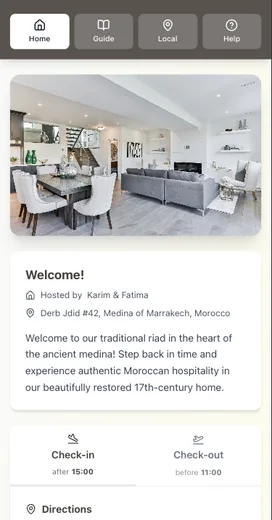
- A single source of truth for guest info (WiFi, parking, check-in, house rules, local tips).
- A short pre-arrival message that sent the most important details at the right time.
- A turnover checklist so every stay felt the same, even when she was tired.
This is the moment most hosts turn a corner. Not because they bought fancy amenities, but because they reduced friction.
Airbnb’s own guidance on ratings focuses on the basics: accurate info, easy check-in, and timely communication.
When Maya aligned her systems with those fundamentals, her reviews started shifting upward.
Month 6: Consistency beats intensity
By midyear, Maya wasn’t working harder. She was working more predictably. The difference showed up in her inbox:
- Fewer “where do I find” questions
- Faster check-in confirmations
- More “everything was easy” comments
This is the quiet compounding effect of hosting systems. The space feels smooth, and guests reward smooth.
The three systems that mattered most
1) Pre-arrival clarity
She sent one message 48–72 hours before check-in with:
- Check-in time + access steps
- Parking and entry photos
- WiFi network + password
2) In-stay answers
She built a short guide with:
- “How to” photos for TV, thermostat, and trash
- A 1-minute walkthrough: “What to do in the first 10 minutes”
- A “what’s walkable” section
3) A predictable checkout
Her checkout instructions were three steps max. Guests didn’t feel pressured or confused.
Month 9: The Superhost target becomes visible
Superhost status is not a magic badge, but it does create clarity. Airbnb’s requirements are public and specific:
- At least 10 stays, or 3 stays totaling 100 nights
- 90%+ response rate within 24 hours
- <1% cancellation rate
- 4.8+ overall rating
Maya used these as a checklist, not a trophy. She could now see exactly where to focus: response time and review quality.
Her systems were already doing the heavy lifting.
Month 12: From overwhelmed to overbooked
By the end of year one, Maya wasn’t just booked — she was confident.
The difference wasn’t her house. It was her process.
Here’s what changed:
- Guests rarely asked repetitive questions.
- Reviews consistently praised clarity and ease.
- The hosting experience felt sustainable.
This is the real first-year transformation: you don’t become a better host by doing more. You become a better host by doing the right few things every time.
The first-year hosting playbook (the short version)
If you’re in year one and want to follow the same path, start here:
- Audit your guest questions. Every repeat question is a missing piece of your guide.
- Simplify check-in. One message, one place for info, zero confusion.
- Make the stay feel predictable. Checklists are a kindness to both you and your guests.
- Align with Airbnb’s rating categories. Accuracy, check-in, communication, location, and value are the levers you can actually control.
Overbooking isn’t luck. It’s clarity, consistency, and fewer guest questions.
Ready to build your own systems?
If you want a practical framework for consistency, start with our guide to the Superhost Secret Weapon or How to Become Airbnb Superhost: A 4.8+ Ratings Playbook.
Conclusion
The first year Airbnb hosting is the hardest because everything lives in your head - and guests can’t see what you know. When you move the basics into systems (one source of truth, a simple pre-arrival message, and checklists), hosting gets calmer and reviews become more consistent.
Key takeaways:
- The first year gets easier when you replace memory with systems.
- Reviews improve when check-in and communication become effortless.
- Airbnb’s public criteria give you a clear target for quality.
- The biggest wins are simple: clarity, consistency, and fewer questions.
If you want to build those systems fast, start by centralizing check-in, WiFi, and house basics in one digital guide guests can open anytime. Related: Airbnb Guest Questions: 15 Things Guests Want to Know and The Superhost Secret Weapon.
Resources
Related posts
- The Superhost Secret Weapon: What Top Hosts Do Differently
- How to Become Airbnb Superhost: A 4.8+ Ratings Playbook
- Airbnb Hosting Mistakes: 12 Mistakes and How to Fix Them
- Five-Star Airbnb Reviews: What 1,000 Reviews Reveal